Why Choose Us
High-Volume, Diverse Clinical Experience
Train in a busy tertiary referral center with exposure to a broad range of advanced gastrointestinal pathology, including bariatric surgery, foregut disorders, complex abdominal wall reconstruction, colorectal disease, gastrointestinal malignancies, endocrine surgery, and advanced endoscopy.
Individualized Fellowship Experience
As the program is designed for a single fellow, trainees receive unparalleled access to faculty mentorship, operative experience, and personalized career development.
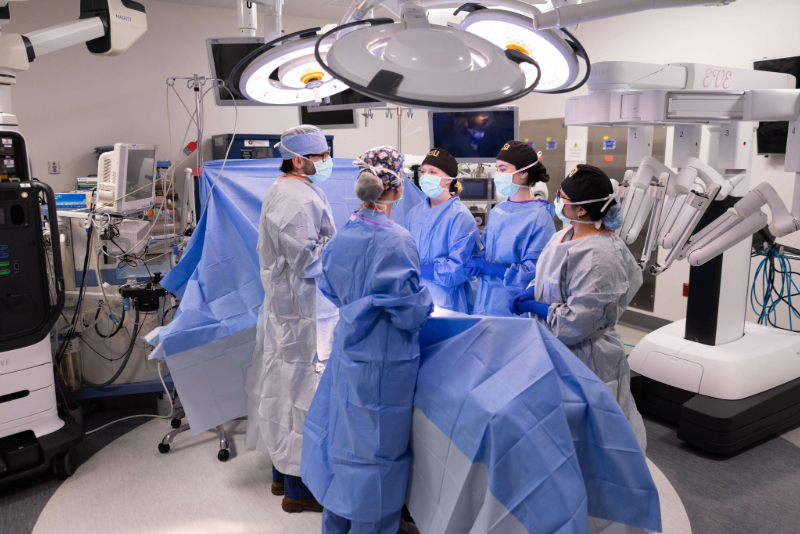
Advanced Minimally Invasive and Robotic Training
Fellows gain extensive experience in laparoscopic and robotic approaches to complex surgical problems, preparing them for modern surgical practice and future leadership in minimally invasive surgery.
Academic and Educational Opportunities
Fellows actively participate in resident and medical student education, multidisciplinary conferences, journal clubs, tumor boards, and research initiatives, fostering both academic growth and teaching skills.
Learn How to Build a Surgical Program
Beyond clinical training, fellows gain insight into healthcare administration, service-line development, quality initiatives, committee leadership, and physician-hospital relationships—skills essential for future surgical leaders.
Exceptional Quality of Life
Limited call responsibilities, dedicated faculty mentorship, and a collegial environment allow fellows to maximize their educational experience while maintaining personal well-being.
About the Program
This one-year fellowship is structured to deliver advanced training in complex gastrointestinal and abdominal operations, with a strong emphasis on minimally invasive techniques. The program is tailored for a single fellow and adheres to the Fellowship Council guidelines, prioritizing the development of technical proficiency, comprehensive patient management skills, and facilitating the transition to independent surgical practice.
Training Facility and Clinical Exposure
All training takes place at a single facility, ensuring continuity and depth of experience. The fellow will gain exposure to a broad spectrum of pathologies and procedures, including but not limited to:
- Management of obesity
- Advanced foregut surgery and GERD management
- Complex abdominal wall surgery
- Colorectal procedures
- Gastrointestinal malignancies
- Splenectomy
- Adrenalectomy
- Endoscopy
The program also reinforces the indications for and interpretation of diagnostic studies, ensuring a well-rounded clinical skill set.
Goals and Objectives
The fellowship aims to train the fellow to independently manage complex gastrointestinal cases, integrate multidisciplinary care, and contribute meaningfully to academic surgery. Additionally, fellows will develop a thorough understanding of surgical service lines, committee involvement, and relationships with administrators. This knowledge is designed to empower fellows to build and manage surgical programs in their future careers.
Educational and Academic Activities
Active participation in resident and medical student education is expected. The fellow will engage in a variety of academic activities, including morbidity and mortality (M&M) conferences, journal clubs, tumor boards, and grand rounds. Involvement in research and quality improvement projects is also anticipated as part of the fellowship experience.
General surgery call responsibilities will be limited to three to four nights per month, with appropriate attending back-up provided.