


Dean's Message Fall 2026
FSU College of Medicine: A time-tested success story
Dear Students, Faculty and Staff:
I’ve learned that time will tell if something is truly a lasting and meaningful success. Having been affiliated with the FSU College of Medicine since its inception — and serving 17 months as interim dean and the last two years as dean — I’ve witnessed the outstanding growth and achievements of not only our college, but also those of our alumni, students, faculty and staff. As we bring to a close our 25th anniversary celebrations, we have much to celebrate and our accomplishments are not going unnoticed.
Take, for example, that we are ranked No. 1 in the state of Florida for our primary care program in the 2026 U.S. News & World Report Medical School Rankings. We work hard to adhere to our mission of producing healthcare professionals with a commitment to primary care medicine and patient-centered care.
Our success is garnering national attention among the best and brightest, and we’re becoming known as “the place to be” for cutting-edge research and education. In 2025, the college added two members of national academies to its faculty. These academies elect the most eminent scholars who advance science, engineering and medicine for the benefit of society. Regan Bailey, Ph.D., an elected member of the National Academy of Medicine, joined the college as a professor in the Department of Behavioral Sciences and Social Medicine. Patrick Stover, Ph.D., joined us as a professor in the Department of Biomedical Sciences. He is an elected member of the National Academy of Sciences and a fellow of the American Association for the Advancement of Science. Both Bailey and Stover are directors of the Institute for Connecting Nutrition and Health (ICON-Health), which is one of two new institutes established recently at the College of Medicine. They join an outstanding faculty already in place at the college.
And, speaking of nutrition, in March the college was nationally recognized by the U.S. Department of Health and Human Services for its integration of nutrition education throughout all four years of the medical school curriculum. I had the opportunity to travel to Washington, D.C., to represent the college at a ceremony hosted by DHHS officials. This truly put the FSU College of Medicine on the national stage.
Recognizing that Washington, D.C., is the place to go to ensure academic medicine has a voice in public policy, I had a well-worn path between our nation’s capital and Tallahassee in the early part of the year. Face-to-face meetings are most effective, and time well spent. In March, I, along with other medical school deans, met with key members of Congress to discuss legislative strategies that support a strong and well-trained physician and research workforce. During our conversation, we discussed the importance of additional Medicare-supported graduate medical education positions, funding for cutting-edge medical research, strengthening the academic medicine workforce through key federal programs and more. These visits were organized by the Association of American Medical Colleges as part of its Capitol Hill Advocacy Day program.
Prior to my trip to Capitol Hill, I was invited to speak to the U.S. Senate Special Committee on Aging, chaired by Sen. Rick Scott, R-Florida. The topic: “The Doctor is Out: How Washington’s Rules Drove Physicians Out of Medicine.” My comments focused on physician burnout and how the regulatory environment plays a role in it.
Just as important as federal support is the backing of our state legislature — and we are grateful for the trust our legislators place in the FSU College of Medicine. Thanks to their support, the Florida Institute for Pediatric Rare Diseases was the other major institute created recently at the college. Its goal: To give hope to children with rare diseases and their families. The Institute’s programs span a pediatric health center, genomic research and diagnostic services, a graduate program in genetic counseling and a range of rare disease research initiatives. In 2025, the Florida Legislature enacted the Sunshine Genetics Act, establishing a landmark partnership between Florida State University and the state legislature to advance genomic medicine for children across Florida. Under this initiative, IPRD serves as the hub of the statewide newborn genomic sequencing program, enabling early diagnosis and intervention for genetic conditions and positioning Florida — and our College of Medicine — as a national leader in precision medicine and pediatric health.
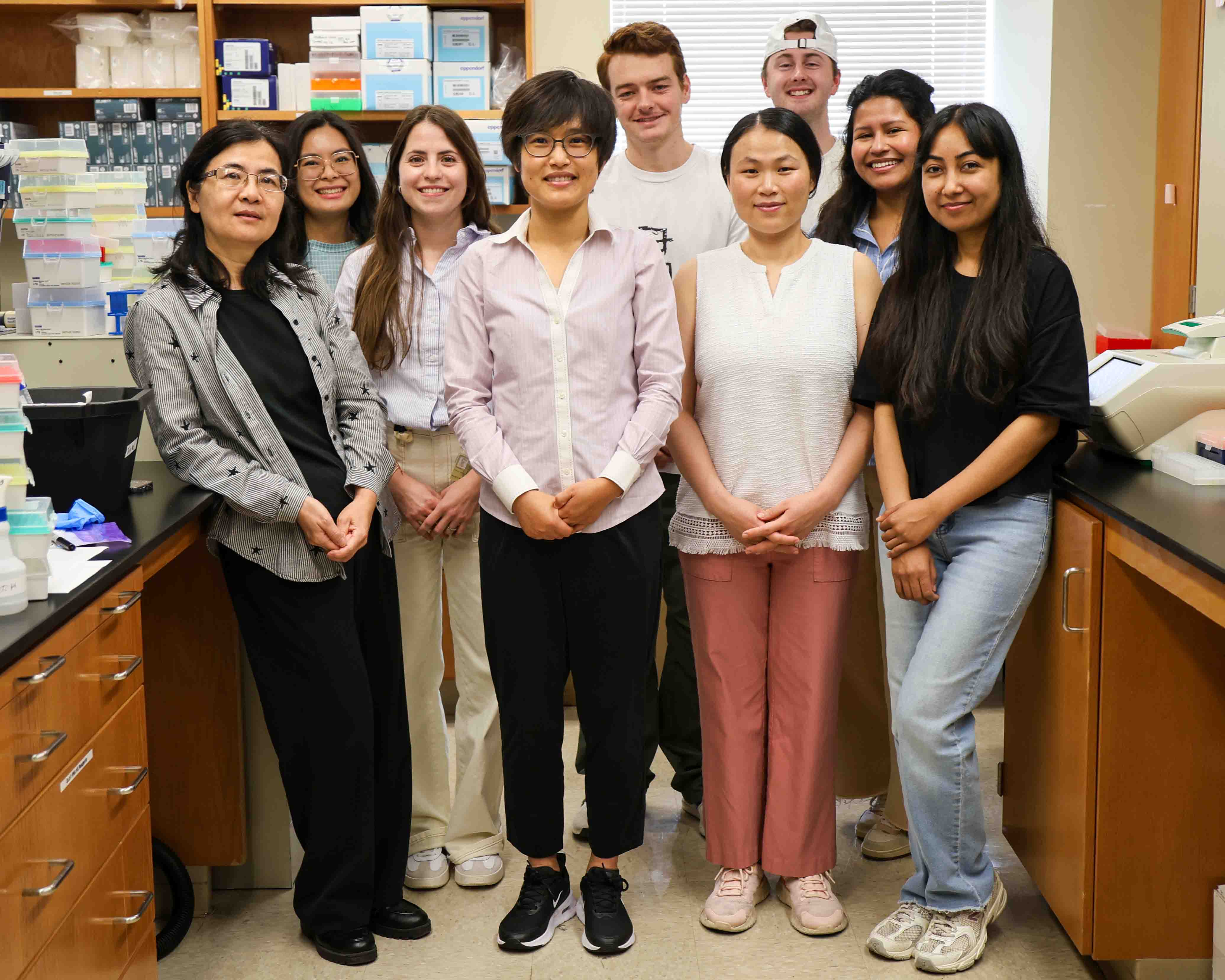
Promoting and fostering a robust research program is vital for a successful college of medicine and for a more meaningful student experience. As stated in our 2025 Annual Report, that fiscal year set a record for the number of proposals submitted, the number of awards received and for total research expenditures ($29.54 million). The books have not yet closed for FY2026, but I am optimistic I will report new record-breaking numbers, thanks to our talented faculty and the staff that support them and their work.
Donor support is crucial to our success — and that of our future healthcare professionals and scientists. I am happy to report that for the 2026 fiscal year ending June 30, we broke a fundraising record! Working in partnership with our donors, the college surpassed its $4 million goal, and we expect to end the year at $4.7 million. From providing funds for student scholarships to endowing professorships and providing programmatic support, our donors are leaving a lasting and positive mark on this college and are “paying it forward” by helping our next generation. If you would like to discuss how you can make an impact, I encourage you to contact Carlee Thomas, assistant dean of advancement, at 407-373-5561 or Carlee.Thomas@med.fsu.edu .
As you can see, our College of Medicine is a success on many levels — and I look forward to sharing more on our progress in the future. To our alumni, students, faculty, staff and friends, I thank you for your continued friendship and support.
With Warm Regards, 
Alma B. Littles, M.D. Dean, FSU College of Medicine