WHO WE ARE
The Rural Medical Education Program at the Florida State University College of Medicine reflects the College’s commitment to preparing physicians to meet the health care needs of Florida’s rural and underserved communities and is an important part of the College of Medicine’s mission .
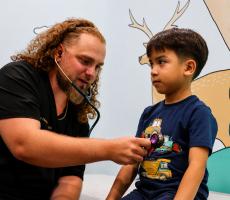
Established in 2005, the FSU Rural Program in Marianna, Florida , provides medical students with an immersive educational experience within a rural medical community. Students have the opportunity to spend their third year of medical school learning alongside community-based physicians while caring for patients across a variety of clinical settings.
A distinguishing feature of the Rural Program is its Longitudinal Integrated Clerkship (LIC) model. Unlike the traditional block model used at FSU’s regional campuses, where students complete individual clerkships in six-week rotations, the LIC uses continuity as a central principle of medical education.
The year begins with an intensive clinical “boot camp” designed to reinforce and build upon skills developed during the first two years of medical school. Students then begin their required third-year clerkships concurrently, participating in each throughout the academic year rather than completing them one at a time. The Rural Program transitioned to the LIC model in 2015.
This longitudinal approach allows students to participate in the comprehensive care of patients over time and to experience the progression of illness, treatment, recovery, and ongoing health management. Through these sustained interactions, students develop meaningful relationships with patients and gain a deeper understanding of the factors that influence health, including patients’ values, families, communities, and social determinants of health.
The LIC model also fosters strong, lasting relationships between students and their clerkship faculty. Working alongside community physicians throughout the year provides students with consistent mentorship, progressive responsibility, and opportunities to strengthen their clinical reasoning, communication, and professional skills.
Together, these experiences provide students with a deeper understanding of rural medicine and the unique rewards and challenges of caring for patients in rural communities.